
Title
I. THE PRELUDE
SAIGON OPERA HOUSE (1863-1896)
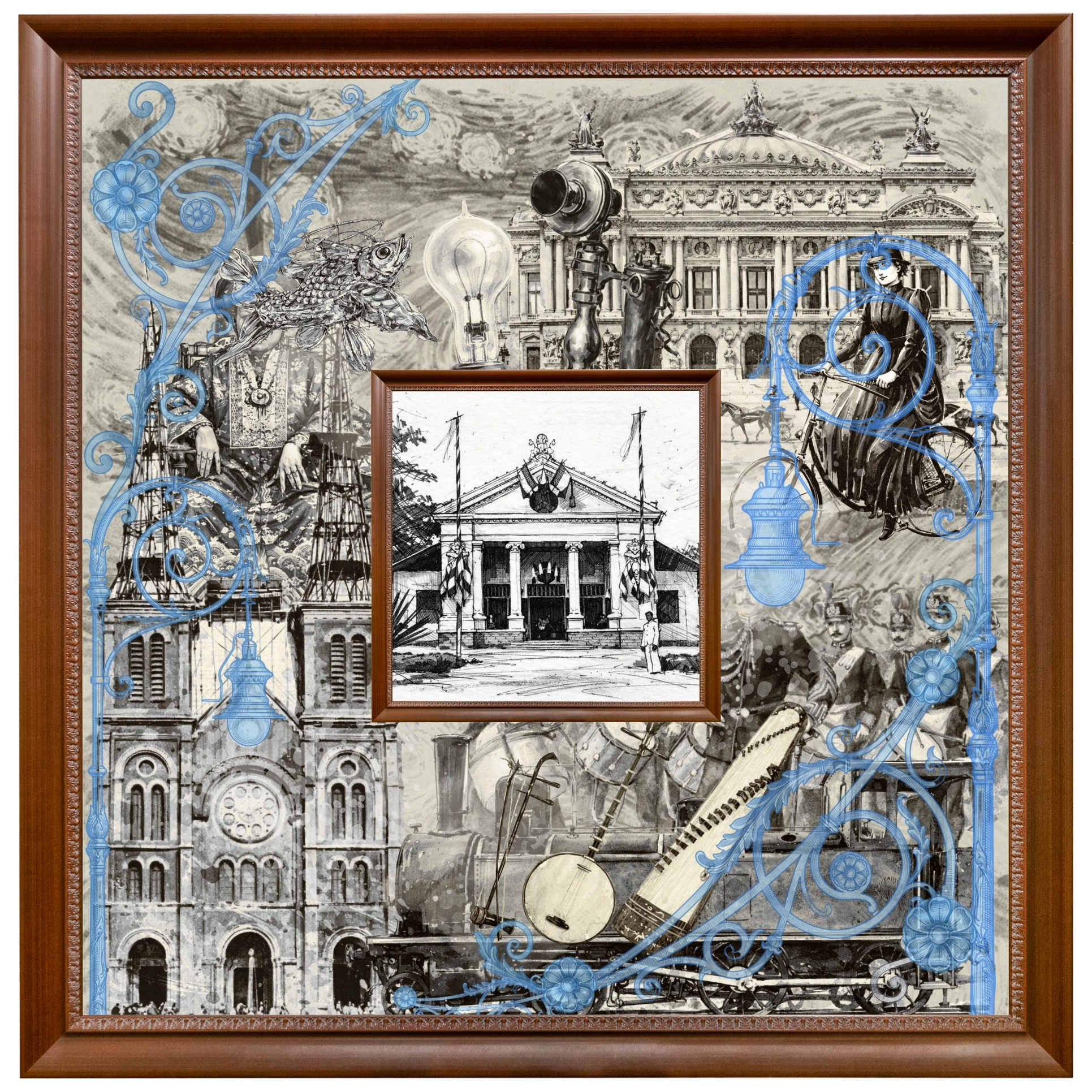
Composition
Non-linear historical collage
Medium
Mixed Media of Digital collage art, architecture sketch and hand-embroidery by the artists from Saigonmuse
Dimension
Wooden frame 68 x 68 cm
Price
USD 850
Edition
10
All proceeds from the sale of this artwork will be dedicated to the Safety Star Program, initiated by GIVE Sustainable in partnership with Survival Skills Vietnam.
The Story
Breathing French dreams into a tropical marshland
Center Frame
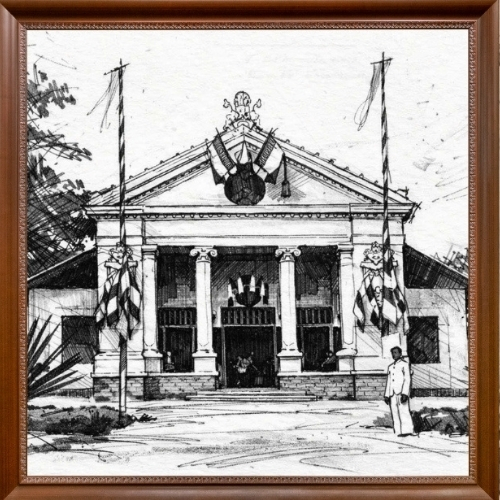
Architecture Sketch of the Temporary Theatre (1885-1890)
Before the stone monument existed, a French military theater was staged in a Théâtre Éphémère, a temporary wooden shed located approximately where the Caravelle Hotel stands today. These early performances were modest Vaudeville acts and military concerts intended to provide a sense of Parisian “home” in a rugged, tropical marshland.
The Swirl of Change
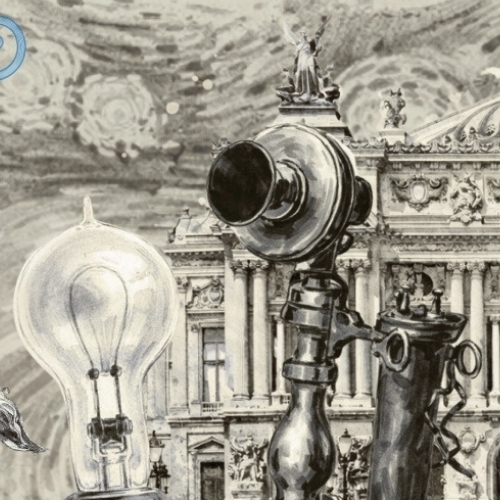
This era of profound transition is mirrored in the turbulent, emotive sky of Van Gogh’s The Starry Night (1889) in the background, which serves as a visual metaphor for the swirling energy of change sweeping across humankind.
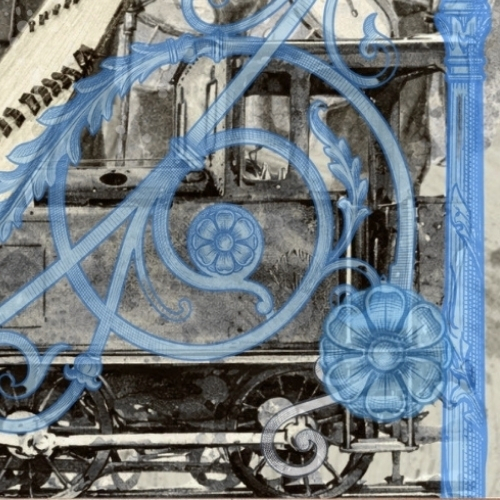
Globally, the cornerstones of the modern world were being laid by the hands of Thomas Edison and Alexander Graham Bell. Their inventions -the light bulb and the telephone– dismantling the barriers of darkness and distance, the world felt suddenly limitless. Locally, the arrival of the Sài Gòn–Mỹ Tho railway line in 1881 -the first in Vietnam- signaled the end of the slow, human-powered past, grounding this global “swirl” into the physical tracks of Saigon’s industrial awakening.
Architectural Anchors
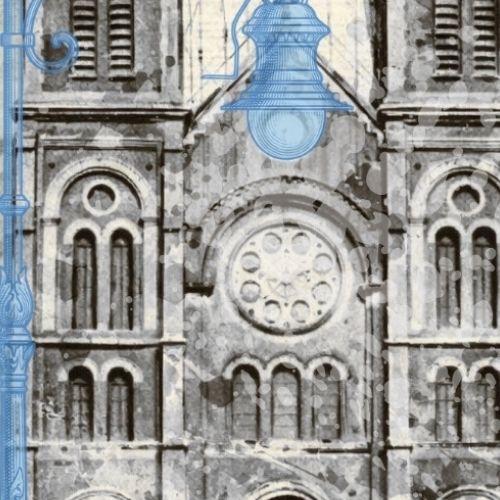
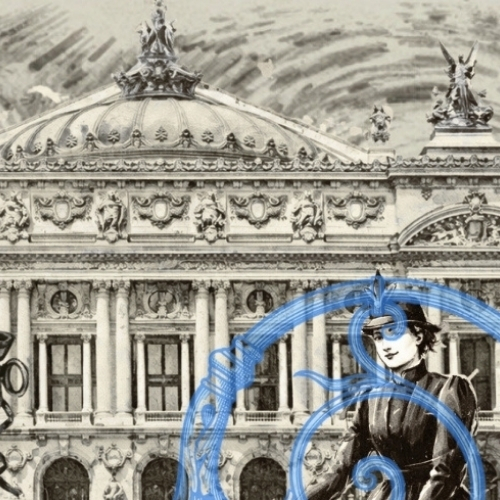
The Palais Garnier in Paris served as the ultimate dream for the French in Indochina -a symbol of the high culture they felt was missing from their colonial outpost. Until they could build their own version, Notre-Dame Cathedral stood as the primary representative of French permanence, its imported red bricks contrasting sharply against the thatched roofs and wooden markets of early Saigon.
Mobility & Social Agency
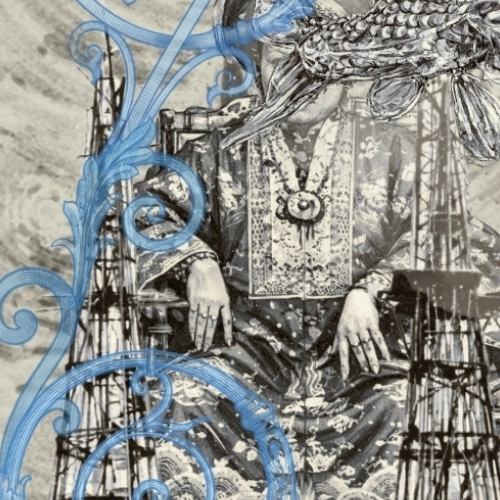
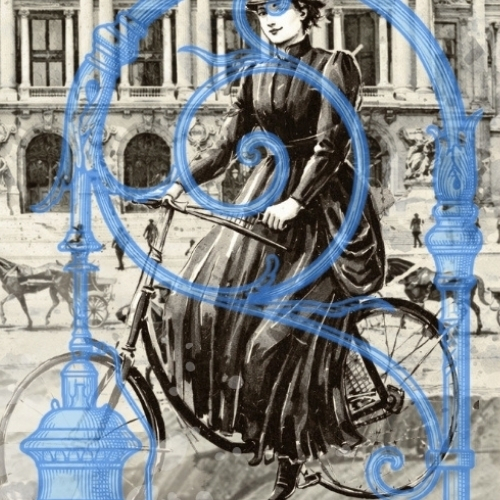
A fascinating dialogue existed between the Cycling Victorian lady and the Imperial Queen’s Costume. While the global rise of the safety bicycle offered a “liberated” Victorian dress that moved with the body, the local Nguyễn Dynasty robes remained a magnificent but static representation of tradition and status. This era marked the first friction between the ancient, symbolic pace of the Vietnamese court and the functional, kinetic energy of the Industrial West.
Musical Dialogue
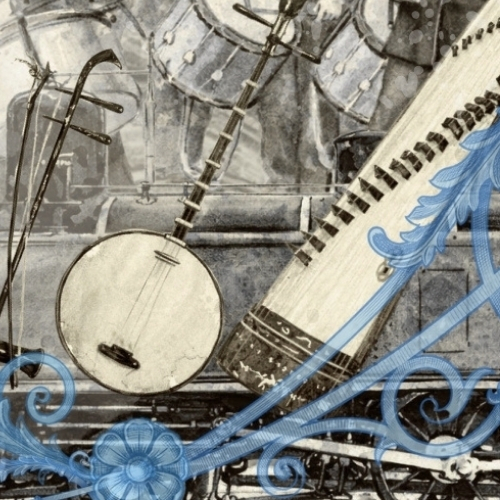
Within the temporary theater, the air was filled with the rigid, brassy sounds of French Marine infantry bands performing vaudeville for a homesick military elite. Just beyond the theater walls, the “soulful strains” of Đờn Ca Tài Tử flourished in private gardens. The trio of the Đàn Tranh, Đàn Kìm, and Đàn Cò provided a delicate, local percussive and melodic counterpoint to the boisterous European stage.
The Visual Contrast of Craft
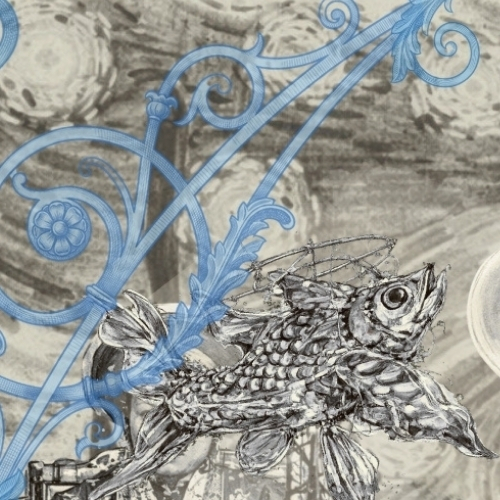
A profound friction existed between the “Machine Age” and “Handicraft.” The global dominance of Victorian Ironwork -seen in the decorative motifs and street lamps of the era- represented the cold, strong precision of the machine. This stood in contrast to the Bao Dap village’s Bamboo Craft Lantern, a “high-touch” local art form. One was forged in ambition and iron; the other was woven in patience and bamboo.
The Thread of Memoir
In this artwork, the blue-hued embroidery recreates the intricate Victorian ironwork found within the Saigon Central Post Office. It serves as a woven memoir of the Industrial Age, stitching together the fragile beginnings of the “Ghost Theatre” with the enduring architectural steel that still defines the city today.
Other artworks from this collection are displayed at Sheraton Saigon Grand Opera Hotel
I. The Prelude (1863-1896)
A transient era of temporary theater and French military music amidst early colonial expansion.
The permanent “French Imprint” era, marked by the 1900 opening of the current Saigon Opera House.
III. The Crescendo (1920-1945)
A golden age of cultural fusion between global Jazz and local Cải Lương.
A political metamorphosis where the theater was stripped of ornament to serve as the National Assembly.
The reclamation of the arts, culminating in the 1998 restoration of the building’s original aesthetic.
A living bridge, hosting both world-class orchestral symphonies and the high-energy phenomenon of idol culture, reflecting a city with a dual heart for timeless tradition and contemporary pop.