

Title
II. OVERTURE
SAIGON OPERA HOUSE (1987-1920)
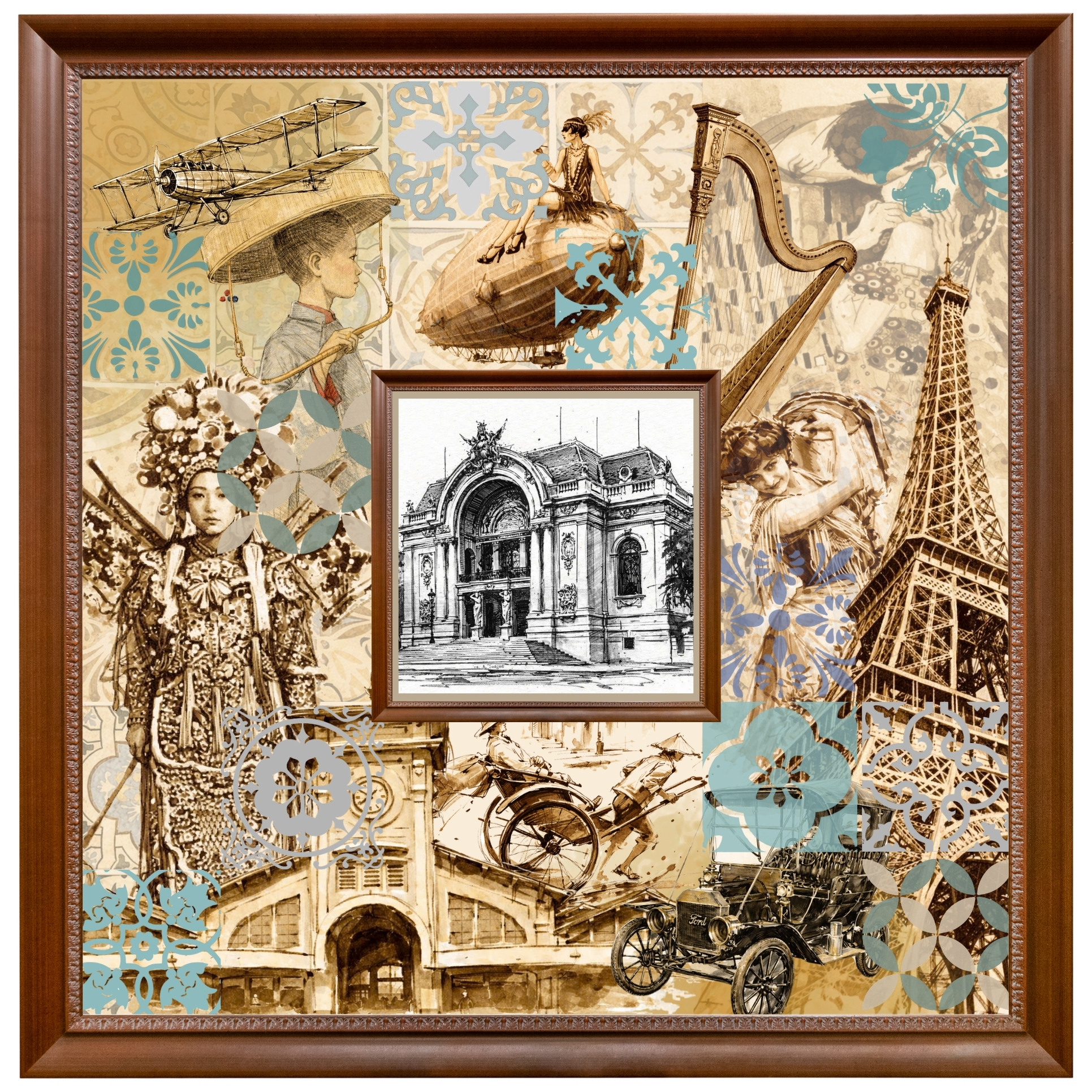
Composition
Non-linear historical collage
Medium
Mixed Media of Digital collage art, architecture sketch and hand-embroidery by the artists from Saigonmuse
Dimension
Wooden frame 68 x 68 cm
Price
USD 850
Edition
10
All proceeds from the sale of this artwork will be dedicated to the Safety Star Program, initiated by GIVE Sustainable in partnership with Survival Skills Vietnam.
The Story
The permanent imprint of a grand colonial opening.
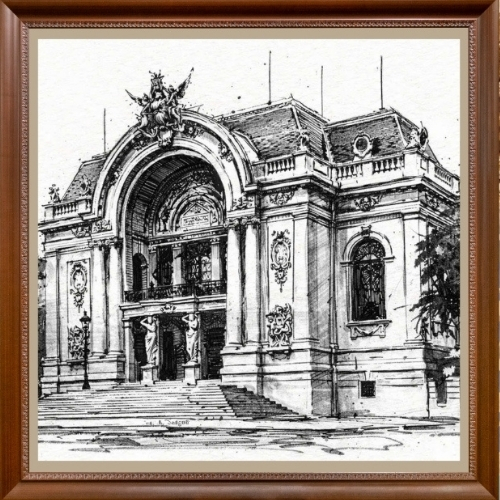
Center Frame
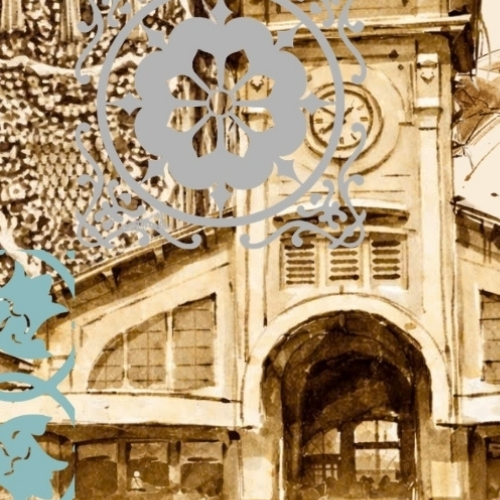
Architecture Sketch of The Saigon Opera House (1900)
Designed by Eugène Ferret, the building was a “theatre-monument” intended to project French prestige. In this era, its facade was at its most ornate, featuring flamboyant statues and stone reliefs that would later be lost to history.
The French Imprint
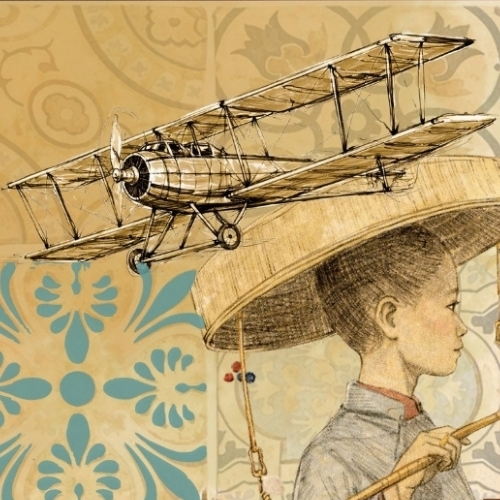
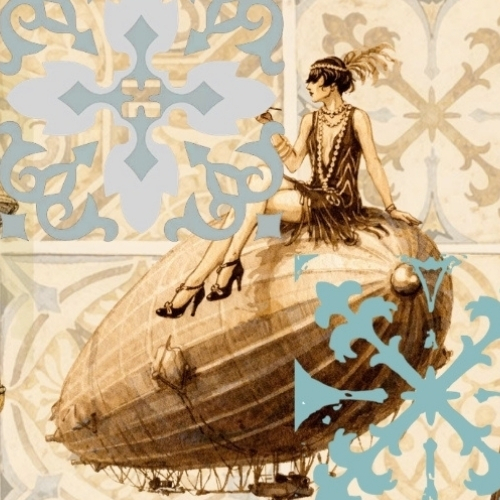
A period defined by the peak of France’s La Belle Époque and its artistic dominance across Indochina. Globally, this was an “Age of Optimism,” marked by milestones for humankind such as the birth of aviation through the Wright Flyer and the Zeppelin, signaling a world becoming rapidly interconnected through daring and technology.
In Saigon, this era represents the “French Imprint”-the literal and figurative stamping of European stone, iron, and social order onto the tropical fabric of the South.
The Identity of Women
Fashion in this era serves as a direct map of female agency. The 1920s global silhouette was an act of aesthetic rebellion-shortening hems and loosening corsets to reflect a woman’s new role in the post-WWI public sphere. In contrast, the Southern Áo Ngũ Thân reflected a more structured, layered identity. The five panels represented the “four parents and oneself,” anchoring a woman’s place firmly within the family hierarchy and traditional morality.
Architecture & Infrastructure
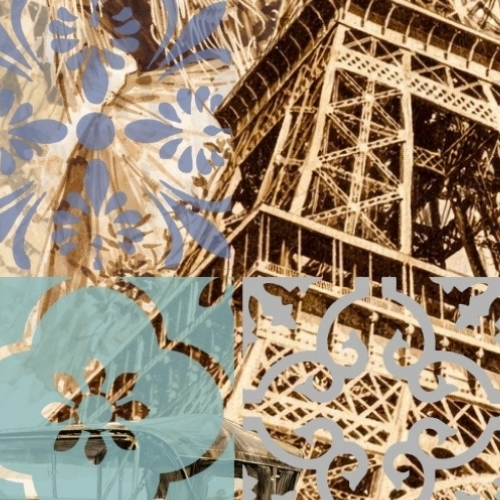
The global obsession with iron and verticality, epitomized by the Eiffel Tower, found a grounded, functional echo in Saigon through the construction of Bến Thành Market. While Paris looked toward the sky, Saigon utilized these new engineering standards to solidify its role as a premier trading hub, creating a landmark that remains the city’s central geometric anchor. These structures acted as the “imprint” of Western permanence on the landscape.
Mobility & Social Tempo
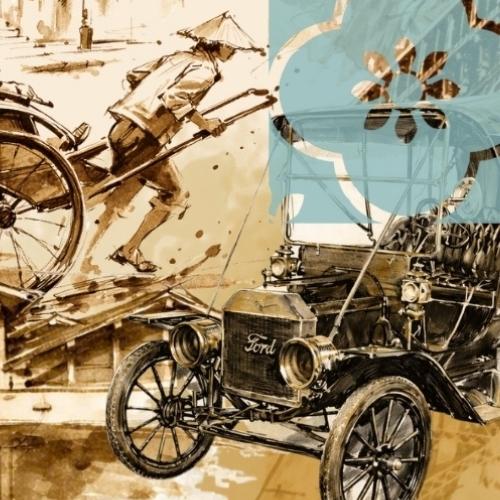
A fascinating friction existed between the Ford Model T and the Rickshaw. Globally, the Model T signaled a shift toward mechanical speed and the democratization of travel. In Saigon, however, the rickshaw represented a localized, human-centric tempo; it was a bridge between the sophisticated urban planning of the French and the traditional labor-intensive reality of the Southern Vietnamese.
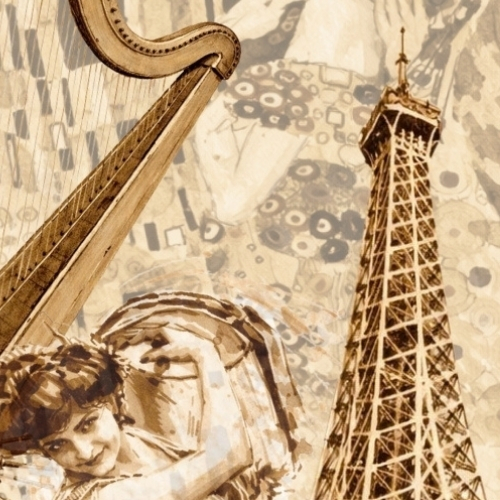
Musical Dialogue
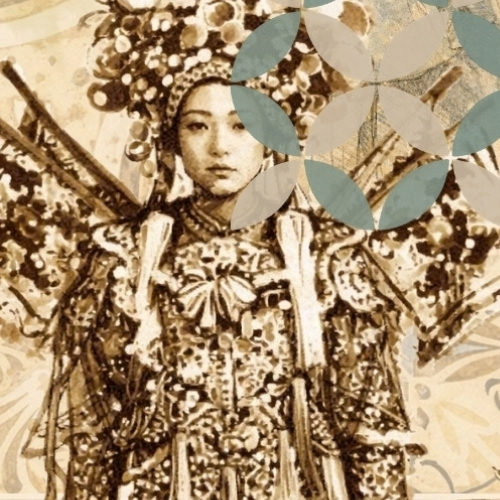
The Saigon Opera House acted as a literal stage for these competing sounds. Within its stone walls, the Harp accompanied high-society “salon” pieces and operas like Carmen, catering to the tastes of the European elite. Outside, the vibrant spectacle of Hát Bội utilized elaborate costumes and symbolic movement to communicate epic tales of loyalty to the Vietnamese populace, maintaining a separate, vibrant artistic heritage.
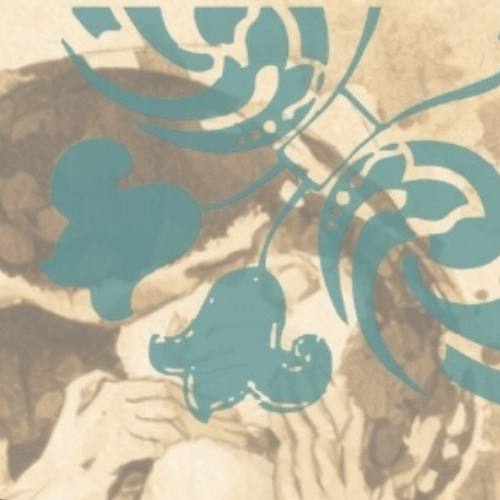
The Art Influence
A profound dialogue occurs between the global avant-garde and local craftsmanship. Gustav Klimt’s The Kiss represents a European move toward symbolic, gold-infused ornamentation that broke from traditional realism. This influence met its architectural match in the Indochine Cement Tile. While Klimt used mosaic-like patterns to explore human emotion, the cement tiles used French geometric logic to create a cooling, durable “skin” for the tropics, marrying European aesthetic complexity with the vibrant, functional palette of the South.
The Thread of Memoir
In this artwork, the green-hued embroidery serves as the color of time lingering upon the aged cement tiles, mirroring the lush, tropical greenery of Vietnam that persistently weaves through the rigid “French imprint” of the city’s architecture.
Other artworks from this collection are displayed at Sheraton Saigon Grand Opera Hotel
A transient era of temporary theater and French military music amidst early colonial expansion.
II. The Overture (1897-1920)
The permanent “French Imprint” era, marked by the 1900 opening of the current Saigon Opera House.
III. The Crescendo (1920-1945)
A golden age of cultural fusion between global Jazz and local Cải Lương.
A political metamorphosis where the theater was stripped of ornament to serve as the National Assembly.
The reclamation of the arts, culminating in the 1998 restoration of the building’s original aesthetic.
A living bridge, hosting both world-class orchestral symphonies and the high-energy phenomenon of idol culture, reflecting a city with a dual heart for timeless tradition and contemporary pop.